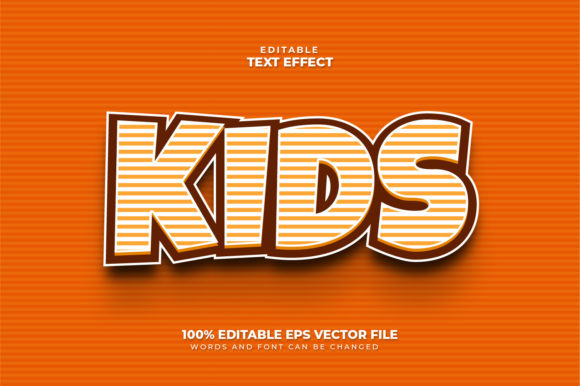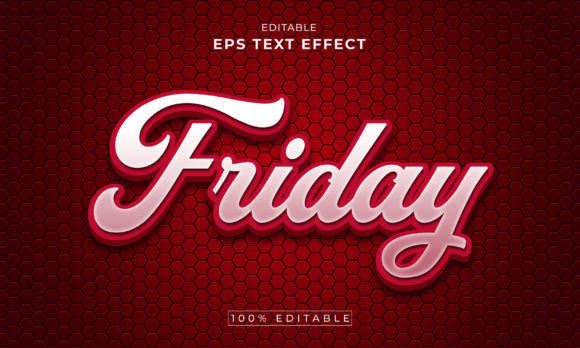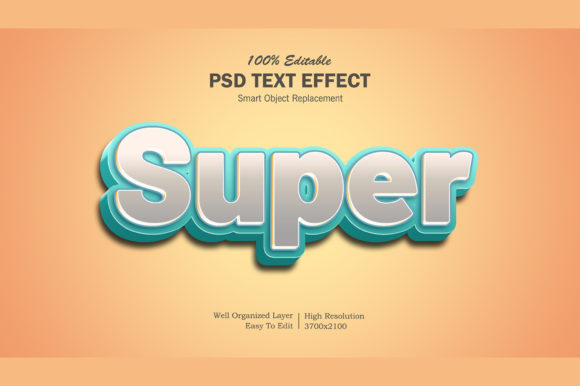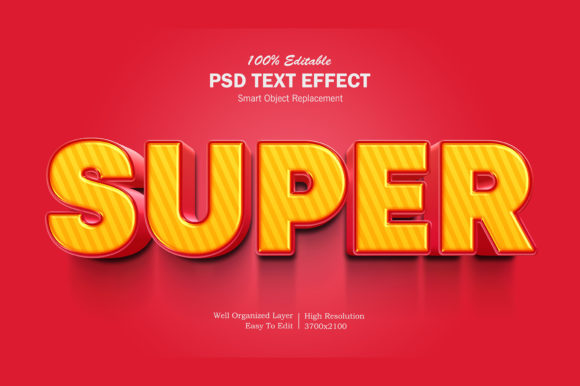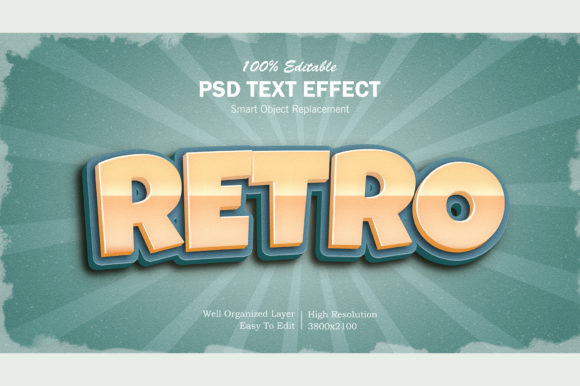
Retro Style Editable PSD 3D Text Effect
In the landscape of digital design, typography is rarely just about legibility; it is a primary vehicle for brand identity and emotional resonance. For creators working within Adobe Photoshop, achieving a specific aesthetic often requires a blend of technical skill and time investment. This is where pre-built graphic resources become indispensable tools in a professional workflow. The Retro Style Editable PSD 3D Text Effect represents a streamlined solution for designers, marketers, and hobbyists who need to produce high-impact typographic elements without starting from a blank canvas. By leveraging smart objects and well-organized layer structures, this resource allows users to integrate complex 3D styling into their projects with minimal friction, ensuring consistency and speed in production.
Understanding the Resource Architecture
At its core, this graphic resource is not merely an image file but a functional template designed for iterative editing. It utilizes the power of Adobe Photoshop’s Smart Object technology. When you open the provided PSD file, you are presented with a hierarchy of layers that have been meticulously organized. This organization is critical for long-term usability. A chaotic layer structure can turn a simple edit into a frustrating troubleshooting session, especially when revisiting files months later. In contrast, a well-structured file allows for rapid modification and clean handoffs between team members or freelancers.
The central feature of this effect is the inclusion of a Smart Object named "Your Text." This element acts as a container for your copy. Unlike standard rasterized text layers, which lose their editability once effects are applied, a Smart Object preserves the vector nature of the text while allowing the surrounding effects—such as shadows, bevels, gradients, and textures—to remain intact and adjustable. This architecture ensures that changes to font size, letter spacing, or the actual wording do not break the visual integrity of the 3D effect. It decouples content from style, a fundamental principle in efficient design systems.
Workflow Integration: From Concept to Output
Integrating the Retro Style Editable PSD 3D Text Effect into your daily routine requires understanding where it fits in the broader creative process. It is most effective during the execution phase of a project, particularly when deadlines are tight or when scaling content across multiple platforms. Consider a scenario where a small business owner needs to launch a promotional campaign. They require a banner for Facebook, a cover image for YouTube, and a flyer for print distribution. Each platform has different aspect ratios and resolution requirements, but they all share the same branding message.
Instead of manually recreating the 3D text effect for each format, the designer opens the master PSD file. They replace the text within the Smart Object, save the changes, and watch the updates propagate automatically to the main composition. This non-destructive workflow significantly reduces the risk of error. If a typo is discovered after the initial design is complete, there is no need to rebuild the 3D extrusion or reapply texture maps. The correction is made inside the Smart Object, saved, and reflected instantly. This efficiency is vital for agencies managing multiple client assets or individual creators producing high volumes of social media content.
Practical Implementation Steps
To maximize the utility of this resource, follow a disciplined approach to implementation:
- Preparation: Before opening the file, ensure you have your final copy ready. While the text is editable, having the exact wording prevents unnecessary toggling between versions. Additionally, decide on the color palette early, as retro styles often rely on specific complementary colors to pop.
- Editing Process: Open the PSD in Photoshop. Locate the Smart Object layer labeled "Your Text." Double-click the thumbnail to open the Smart Object in a new tab. Replace the placeholder text with your own. Adjust the font choice if desired, keeping in mind that bold, heavy fonts typically render better in retro 3D styles due to the depth of the extrusion. Once satisfied, press Ctrl+S (or Cmd+S on Mac) to save. Close the Smart Object tab.
- Review and Export: Return to the main document. The text should now appear with the full 3D effect applied. Check for any clipping issues at the edges of the canvas. If adjustments to lighting or shadow direction are needed, utilize the adjustment layers provided in the file’s organized structure. Finally, export the result using "Export As" or "Save for Web" to optimize file size for digital use, or use "Print Quality" settings for physical media like T-shirts or posters.
Expanding Use Cases Beyond Standard Graphics
While the primary application of the Retro Style Editable PSD 3D Text Effect is obvious—creating eye-catching titles—the versatility of the tool extends into various niche areas. For instance, in the realm of merchandise design, such as T-shirts or clothing lines, the 3D effect adds a tactile quality to the print. The deep shadows and highlights simulated in the PSD translate well to screen printing or direct-to-garment printing, providing a premium look that stands out against fabric textures. Similarly, for greeting cards or placards, the retro aesthetic evokes nostalgia, which can be a powerful marketing hook for brands targeting millennial or Gen X demographics.
Furthermore, this resource is highly suitable for video content creators. YouTubers and streamers often need consistent branding elements for their intros, lower thirds, and end screens. Using a PSD template ensures that every video maintains a uniform visual language. The high-resolution nature of the file means that even when scaled up for large monitors or projected displays, the text remains crisp and free of pixelation. This is crucial for maintaining professionalism in digital presentations and logo reveals.
Quality Control and Compatibility Considerations
When adopting any third-party graphic resource, compatibility and quality assurance are paramount. The Retro Style Editable PSD 3D Text Effect is delivered as a single PSD file accompanied by a Read Me text file. This documentation is essential for troubleshooting. It likely contains information regarding required Photoshop versions, font dependencies, and layer naming conventions. Users should always check these details before purchasing or downloading to ensure their software environment supports the features used in the template.
Another critical factor is the resolution. High-resolution assets are necessary for both web and print applications. Ensure that the PSD file is set to a sufficient DPI (dots per inch), typically 300 DPI for print materials like flyers and posters, and 72–150 DPI for web graphics like banners and social media covers. The included image file serves as a preview, but the PSD is the source of truth for quality. If you plan to use the design for large-format printing, verify that the canvas dimensions are adequate to prevent blurriness.
Organization also plays a key role in long-term project management. Because the layers are well-organized, you can easily isolate specific components of the text effect for further manipulation. For example, you might want to separate the shadow layer to apply a different blur effect or change the gradient of the extrusion independently. This flexibility allows for customization beyond the default appearance, enabling you to tailor the retro style to fit a more modern or alternative brand identity if needed.
Strategic Value for Creators and Businesses
From a business perspective, the value of such a resource lies in its ability to reduce production time while maintaining high output quality. Time is a scarce resource for entrepreneurs and freelancers. By automating the complex steps of creating 3D text, you free up hours that can be redirected toward strategy, client communication, or developing other aspects of the brand. The "one-click" nature of updating the text through Smart Objects minimizes cognitive load, allowing you to focus on the creative vision rather than the technical execution.
Moreover, consistency builds trust. Whether you are designing a website element, a Facebook cover, or a movie title sequence, using a cohesive typographic style reinforces brand recognition. The Retro Style Editable PSD 3D Text Effect provides a standardized way to achieve this consistency across diverse media. It eliminates the variability that comes from manual creation, ensuring that every piece of collateral looks professionally crafted. This reliability is particularly important for educators and bloggers who may lack advanced design skills but need to produce engaging visual content to retain audience attention.
In conclusion, the Retro Style Editable PSD 3D Text Effect is more than just a decorative tool; it is a component of an efficient design system. By understanding its architecture, integrating it into your workflow correctly, and respecting its technical requirements, you can leverage it to enhance your creative output. Whether you are a seasoned graphic designer looking to speed up your pipeline or a small business owner aiming to elevate your visual presence, this resource offers a practical, high-quality solution for bringing your textual ideas to life in three dimensions.