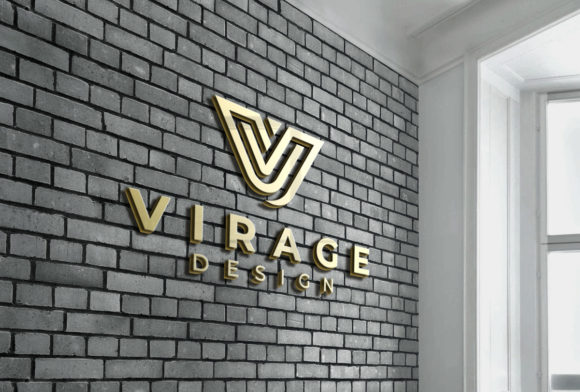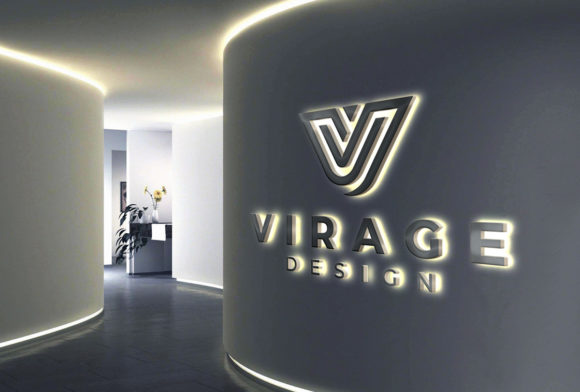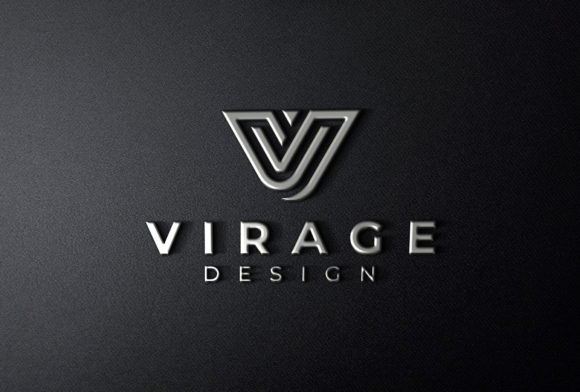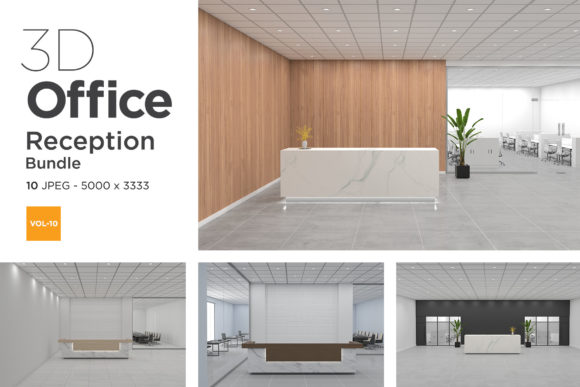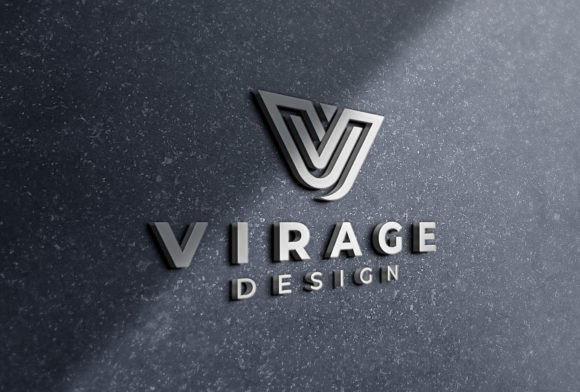
3D Logo Mockup Signage on Office Wall
Walking into a modern workspace, the first thing you notice isn’t usually the furniture or the lighting—it’s the brand presence. That bold, tactile logo mounted on the wall serves as an immediate signal of professionalism and identity. For designers, entrepreneurs, and marketers, capturing that specific feeling in a digital presentation is often the difference between winning a client and losing them to a competitor who looked more "real." This is where 3D Logo Mockup Signage on Office Wall becomes an indispensable tool in your creative arsenal.
It is not just about slapping a flat PNG onto a background image. It is about simulating depth, material, and environment to create a photorealistic result that convinces the viewer they are standing in the room with you. Whether you are a freelancer pitching a rebranding package or a small business owner preparing for a grand opening, understanding how to leverage these mockups can significantly elevate your visual communication.
Why Realism Matters in Client Presentations
The human brain processes visual information faster than text, but it also detects inconsistencies instantly. If you present a 2D logo floating against a generic white background, the client has to use their imagination to see how it looks in the real world. That requires mental effort, and when people have to work hard to visualize something, they often disengage or become skeptical.
A high-quality 3D Logo Mockup Signage on Office Wall removes that friction. By providing layered and well-structured PSD files, you allow for easy editing via smart objects, which means you can insert your design and immediately see it rendered with realistic shadows, reflections, and perspective. The resolution of 2000x1350px ensures that even when zoomed in on a large monitor or printed for a physical boardroom handout, the details remain crisp and convincing.
Consider the scenario: You are presenting a new corporate identity to a conservative bank executive. A flat image might feel too casual. But a mockup showing your logo embossed on brushed metal, mounted on a textured concrete office wall, communicates stability, premium quality, and attention to detail before you even say a word. It transforms your abstract concept into a tangible asset.
Real-World Use Cases Beyond the Pitch Deck
While client presentations are the most obvious application, the utility of 3D Logo Mockup Signage on Office Wall extends across various professional and personal contexts. Here is how different users can apply this resource effectively.
- Interior Designers and Architects: When proposing office layouts to clients, architects often struggle to convey how branding elements will integrate with the physical space. Using these mockups allows them to show exactly where the signage will sit relative to windows, doors, and furniture, helping clients visualize the final aesthetic outcome.
- Freelance Graphic Designers: For solo practitioners, time is money. Instead of spending hours setting up complex 3D software scenes from scratch, downloading a pre-built, photorealistic template saves valuable hours. These templates often come with realistic backgrounds and textures that would take days to render manually.
- Small Business Owners: Imagine you are opening a boutique coffee shop. You need to decide between acrylic lettering, neon signs, or wooden plaques. By using different variations of 3D Logo Mockup Signage on Office Wall, you can test multiple materials and styles without committing to expensive physical prototypes.
- Educators and Students: In graphic design courses, instructors can use these mockups to teach students about environmental graphics. Seeing a logo applied to a wall helps students understand scale, typography legibility at a distance, and how lighting affects perception.
Understanding the Technical Advantages
To get the best results, it is important to understand what makes these mockups effective. The core value lies in the file structure. A typical high-end mockup comes as a layered PSD file. This is crucial because it separates the background, the wall texture, the shadow layers, and the logo placement area.
Easy Editing via Smart Objects is the key feature here. When you double-click the smart object layer in Photoshop, your logo opens in a separate window. Once you save and close that window, the mockup automatically updates, applying the correct perspective, warping, and blending modes to match the wall surface. This means you don’t need advanced skills in 3D modeling; you just need basic knowledge of Photoshop.
Furthermore, the inclusion of Real Backgrounds and Textures adds authenticity. A clean, sterile white wall rarely exists in the real world. Walls have imperfections—subtle cracks, paint variations, or acoustic paneling. These tiny details ground the image in reality. When combined with accurate lighting simulations, such as softbox reflections or natural sunlight casting shadows, the result is indistinguishable from a photograph taken by a professional photographer.
Practical Considerations Before You Start
While these tools are powerful, there are practical steps you should take to ensure your final output looks professional rather than amateurish.
- Check the Resolution: Ensure the source file meets your needs. A resolution of 2000x1350px is excellent for web use, social media posts, and standard print sizes. However, if you plan to print the mockup for a large-format poster, you may need a higher-resolution source file to avoid pixelation.
- Match Your Lighting: Even with automated smart objects, the lighting in your original logo file matters. If your logo has strong highlights or drop shadows baked into the PNG, it may clash with the lighting in the mockup. It is best to use vector files (AI, EPS) or transparent PNGs with minimal internal effects.
- Contextual Relevance: Not every office wall is the same. A tech startup might prefer a sleek, minimalist glass wall, while a law firm might opt for dark wood paneling. Choose a mockup that aligns with the brand personality you are trying to convey. Using a rugged industrial brick wall for a delicate, feminine beauty brand might send the wrong message.
- Legal and Licensing Rights: Always review the license agreement associated with the mockup. Some resources are free for personal use only, while others require a commercial license for client work. Ensuring you have the right to use the template prevents legal headaches down the line.
Enhancing Your Workflow with Strategic Selection
The market offers thousands of variations of 3D Logo Mockup Signage on Office Wall. To streamline your workflow, consider building a curated library of favorites. Categorize them by style—minimalist, industrial, corporate, creative—and by material—metal, wood, acrylic, LED.
When you are under tight deadlines, having a pre-vetted collection allows you to focus on the design itself rather than hunting for the perfect background. It also ensures consistency in your portfolio. If all your clients see presentations with similar high-quality lighting and texture standards, your work appears more cohesive and professional.
Additionally, think about the medium of delivery. Are you sending the presentation via email? A compressed JPEG of the mockup works well. Are you presenting live on Zoom? A high-resolution PNG or PDF ensures that when you share your screen, the details remain sharp. Understanding the end-use case helps you export and format your files correctly.
The Impact on Brand Perception
Ultimately, the goal of using 3D Logo Mockup Signage on Office Wall is to build trust. In a digital-first world, clients cannot touch or see your physical product until the contract is signed. They rely entirely on your ability to demonstrate competence through visuals. A sloppy presentation suggests a sloppy approach to the project. A polished, realistic mockup suggests precision, foresight, and expertise.
By investing time in selecting and utilizing high-quality mockups, you are not just showcasing a logo; you are showcasing your ability to think holistically about brand implementation. You are demonstrating that you understand how designs interact with real-world environments. This level of detail resonates with adults aged 20–50 who value authenticity and practical solutions. They want to know that the investment they are making will look good in reality, not just on a screen.
Whether you are a hobbyist blogger designing a side-project brand or a seasoned marketer leading a global campaign, the principles remain the same. Realism sells. Clarity convinces. And with the right tools, creating that convincing realism is easier than ever. Take advantage of the structured, editable nature of modern PSD mockups to bridge the gap between concept and reality, and watch your confidence—and your conversion rates—rise.